
 Save
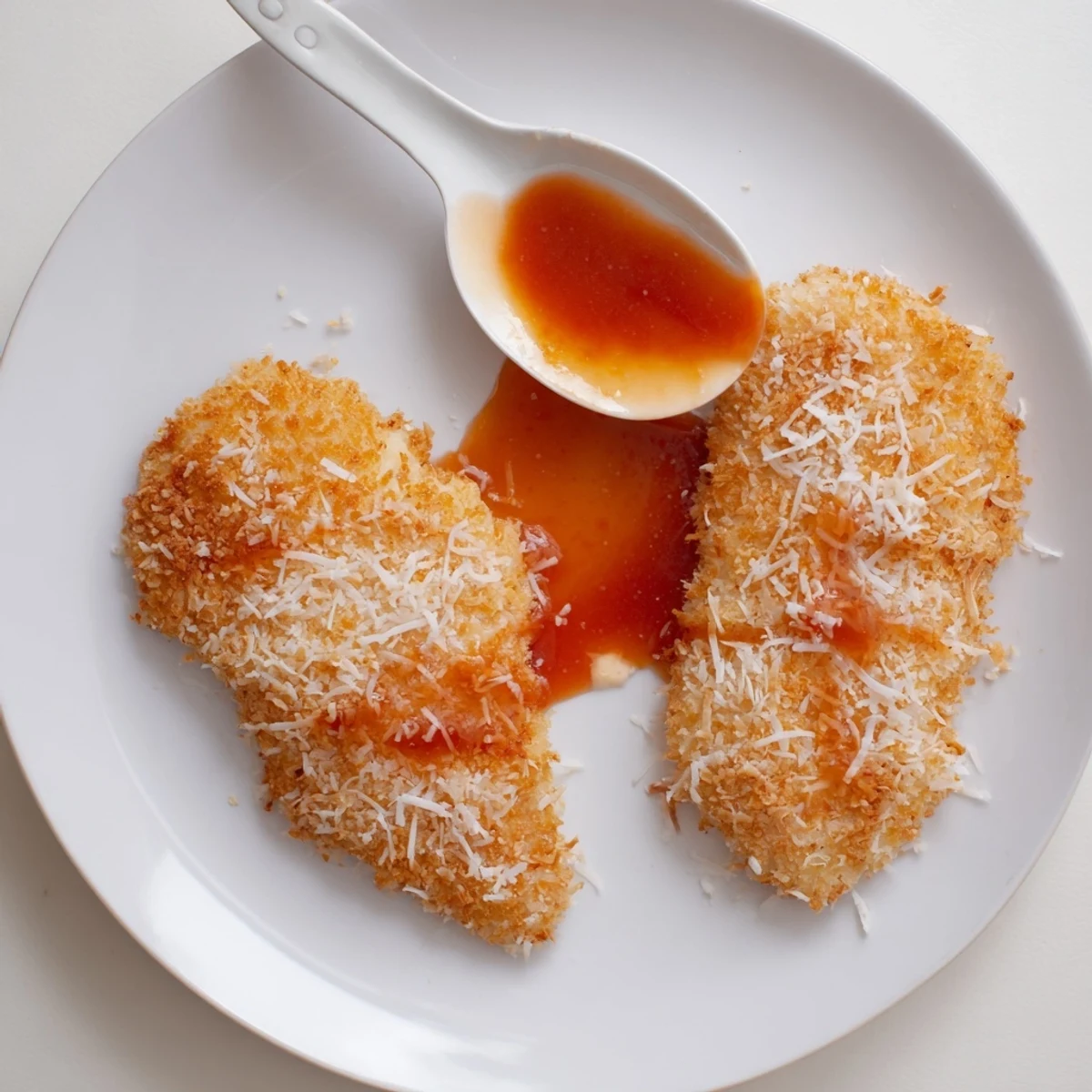
Save Season chicken and dredge in flour, egg wash, then a coconut–panko mix. Shallow-fry 2–3 minutes per side until golden, then finish in a 400°F (200°C) oven for 15–18 minutes. Simmer apricot preserves with soy, rice vinegar, ginger and garlic until slightly thickened. Serve hot with sauce; pairs well with jasmine rice or a crisp green salad. Swap to gluten-free flour/panko or to shrimp for a seafood twist.
The sizzle of coconut hitting hot oil is one of those sounds that instantly transports me somewhere warmer, somewhere with ceiling fans and salt air and absolutely no responsibilities worth mentioning.
I made this on a rainy Tuesday when the grocery store had apricot preserves on clearance and I refused to let them sit there neglected. My neighbor stopped by to return a casserole dish and ended up staying for two helpings, standing at the counter, sauce dripping off her chin, not even slightly embarrassed.
Ingredients
- 4 boneless skinless chicken breasts: Pound them to even thickness so nothing dries out while the thickest part finishes cooking through.
- Salt and pepper: A simple seasoning layer that wakes up the meat before anything else touches it.
- 1 cup all purpose flour: The foundation coat that helps everything else stick properly.
- 2 large eggs plus 2 tablespoons water: The glue between flour and coconut, and the water keeps it from being too thick.
- 1 cup shredded unsweetened coconut: Sweetened works too but it burns faster, which I learned the hard way with a very smoky kitchen.
- 1/2 cup panko breadcrumbs: Mixed with the coconut for extra crunch without overwhelming the coconut flavor.
- 1 cup apricot preserves: The backbone of a sauce that tastes far more complex than it has any right to.
- 2 tablespoons soy sauce: Adds saltiness and depth that balances the sweetness perfectly.
- 2 tablespoons rice vinegar: Brightens everything up and keeps the sauce from becoming cloying.
- 1 tablespoon fresh ginger grated: Fresh matters here, that zing is irreplaceable.
- 1 teaspoon garlic minced: Just enough to remind you it is there without stealing the spotlight.
- 1/2 teaspoon crushed red pepper flakes: Optional but the gentle heat against the sweet apricot is what makes this sauce sing.
- Oil for frying: Coconut oil feels right thematically, but vegetable oil works beautifully too.
Instructions
- Preheat and prepare:
- Crank your oven to 200 degrees Celsius, line a baking sheet with parchment paper, and give yourself some counter space because things are about to get a little messy in the best way.
- Season the chicken:
- Sprinkle salt and pepper evenly over both sides of each breast, letting the seasoning settle into the meat while you set up your breading station.
- Build your breading line:
- Arrange three shallow bowls in a row, flour in the first, beaten eggs with water in the second, and the coconut panko mixture in the third, because organization is the difference between calm confidence and flour on your forehead.
- Coat each piece:
- Press each breast into flour first, shaking off the excess, then swim it through the egg wash, and finally press it firmly into the coconut mixture, really packing it on with your palms so every inch is covered.
- Fry until golden:
- Heat about a centimeter of oil in a large skillet over medium heat and fry each breast two to three minutes per side until the crust turns a deep warm gold, then transfer them to your waiting baking sheet.
- Finish in the oven:
- Bake the pan fried chicken for fifteen to eighteen minutes until the internal temperature hits 74 degrees Celsius, which guarantees juicy fully cooked meat under all that glorious crunch.
- Make the apricot sauce:
- While the chicken bakes, dump the apricot preserves, soy sauce, rice vinegar, ginger, garlic, and red pepper flakes into a saucepan and let it bubble gently over low heat for about five minutes until it thickens just enough to coat the back of a spoon.
- Serve and enjoy:
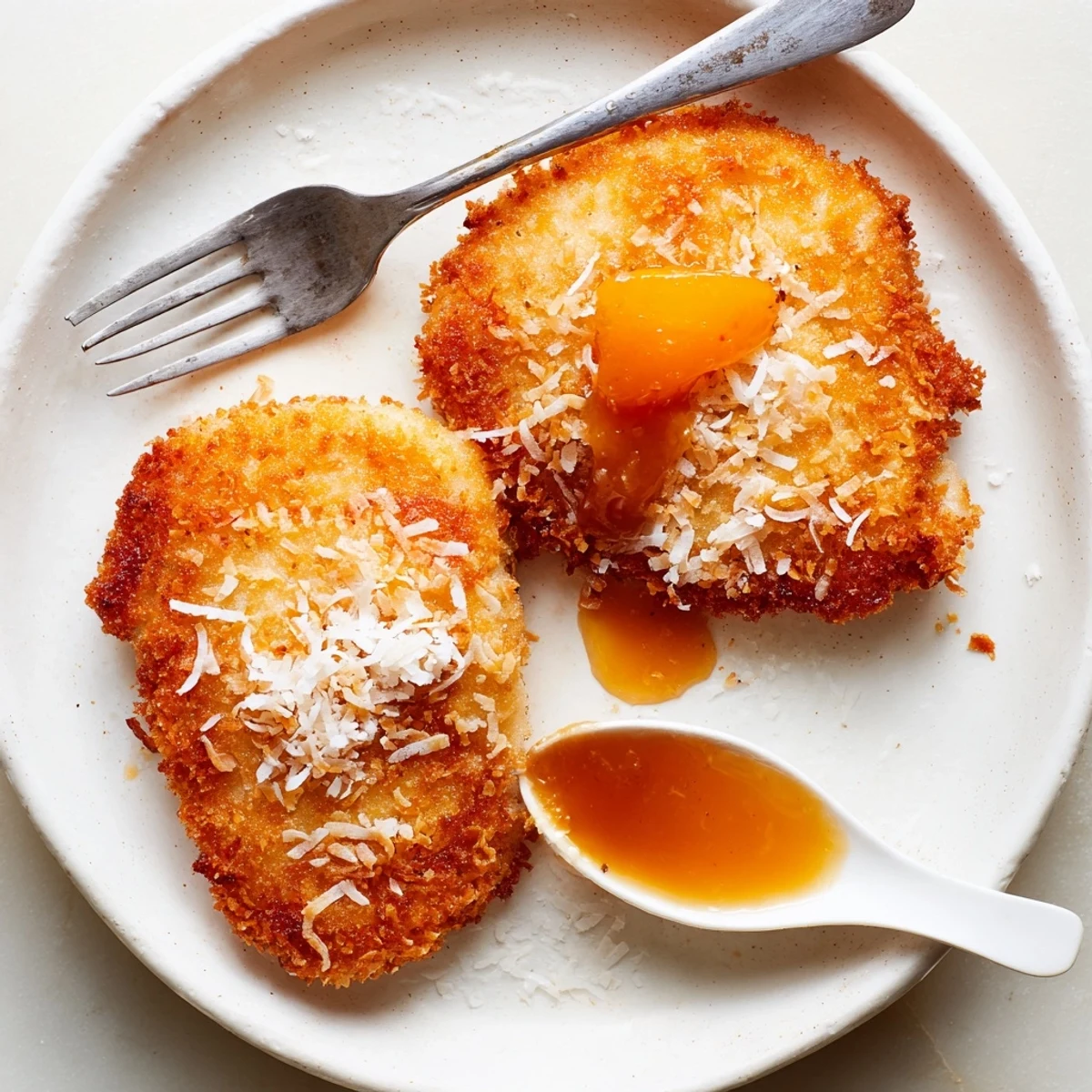
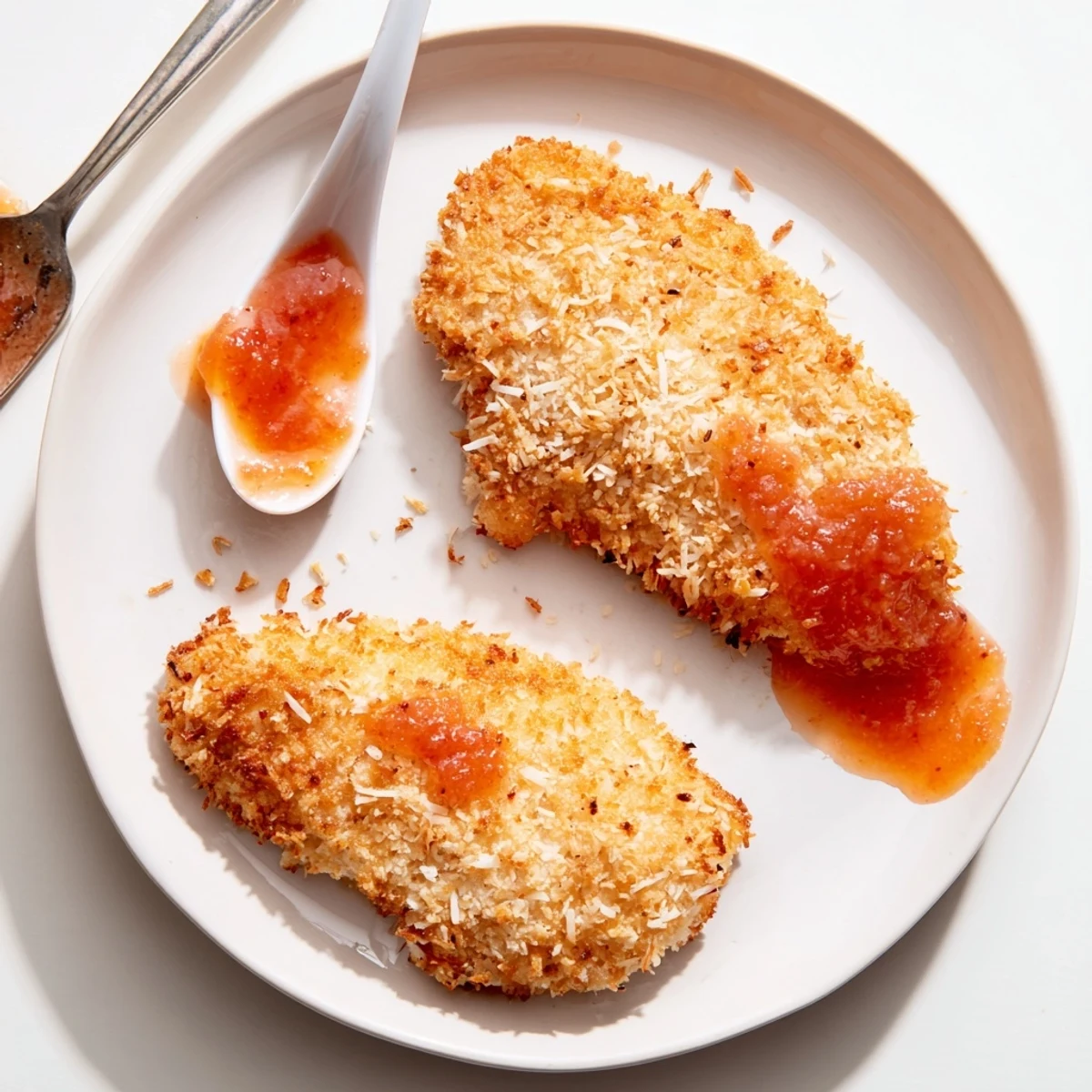
- Drizzle that gorgeous amber sauce over the hot crispy chicken or serve it on the side for dipping, and watch everyone at the table go quiet in that satisfied way that means you nailed it.
 Save
Save The night I first got this right, my teenage son who normally communicates in grunts actually set down his phone, looked at his plate, and said this is really good, and I will remember that moment longer than any culinary award.
Serving Suggestions That Actually Work
Jasmine rice is the obvious move and for good reason, the fluffy grains soak up that apricot sauce like they were born for it. A simple green salad with something sharp, maybe a lime vinaigrette, cuts through the richness beautifully and makes you feel like you made a complete meal instead of just a really good piece of chicken.
Handling the Coconut Coating
Unsweetened coconut is the safer bet because sweetened coconut has a tendency to brown too fast in the oil before the chicken is ready. If sweetened is all you have, lower the heat slightly during frying and keep a very close eye on it. Press the coating on firmly with your hands rather than just tossing it, because the pressure is what makes it adhere through the frying and baking without falling off in sad patches.
Making It Your Own
This recipe is forgiving and likes to be played with, which is the best kind of recipe. The apricot sauce works just as well on shrimp or even crispy tofu if you want to go a different direction entirely.
- Swap chicken for large shrimp and reduce the baking time to about eight minutes.
- For gluten free, use your favorite gluten free flour blend and gluten free panko without changing anything else.
- Always check labels on the preserves and soy sauce for hidden allergens if you are cooking for someone sensitive.
 Save
Save This is the kind of dish that turns an ordinary weeknight into something worth sitting down for, sauce on your chin and all. Make it once and it will earn a permanent spot in your rotation.
Recipe FAQs
- → How do I keep the coconut coating from falling off?
-
Press the coconut–panko firmly onto the chicken and let coated pieces rest a few minutes before frying. Chilling the breasts briefly helps the coating adhere. Work gently when turning to avoid dislodging the crust.
- → What oil temperature is best for frying the chicken?
-
Heat oil over medium so it reaches a steady sizzle but not smoking. Aim for shallow frying that gives a golden crust in 2–3 minutes per side, then finish in a 400°F (200°C) oven to cook through without overbrowning.
- → How can I thicken the apricot sauce if it's too runny?
-
Simmer the sauce a few minutes longer to reduce and concentrate it. For a quick thicker gloss, whisk a small cornstarch slurry (1 tsp cornstarch + 1 tbsp cold water) into the simmering sauce and cook until it brightens and thickens.
- → Can I make this gluten-free?
-
Yes. Substitute all-purpose flour and panko with gluten-free flour and gluten-free breadcrumbs or crushed gluten-free cereal. Ensure apricot preserves and soy sauce are labeled gluten-free or use tamari as an alternative.
- → What are good side pairings for this dish?
-
Jasmine rice soaks up the apricot sauce, and a crisp green salad or steamed vegetables balances the sweet crust. For a heartier plate, pair with coconut rice or lightly dressed slaw.
- → Can I use shrimp instead of chicken?
-
Yes—shrimp make a quick seafood adaptation. Use large shrimp, adjust cooking to 1–2 minutes per side until opaque, and skip the oven finish. The apricot sauce complements shrimp nicely.
